Introduction: The Resurgence of Water in Modern Gardens
In an era where gardens serve as sanctuaries for mindfulness and creative expression, water features have emerged as transformative elements that blend artistry with ecology. Once symbols of opulence, today’s designs prioritize sustainability, wellness, and seamless integration with nature. As we navigate 2025, innovations in solar technology, biomimicry, and regenerative landscaping have redefined water features as essential components of eco-conscious outdoor spaces. This guide explores how to harness their magic—whether you seek a minimalist fountain or a wildlife-supporting pond.
1. 2025’s Top Water Feature Trends: Where Design Meets Innovation
A. Sustainable & Self-Sustaining Systems
- Solar-Powered Fountains: Modern solar pumps now run 8–10 hours daily, even in partial shade, with battery backups ensuring continuous flow. Zero electricity costs and carbon-neutral operation make them ideal for eco-homes .
- Rainwater Harvesting Integration: Features fed by collected rainwater reduce municipal water use by up to 50%. Systems like pondless waterfalls recirculate water efficiently, minimizing waste.
- Recycled Materials: Fountains crafted from reclaimed stone, metals, or composite materials reduce environmental impact while adding rustic elegance.
B. Smart Tech & Customizable Experiences
- App-Controlled Features: Adjust flow intensity, lighting, and sound via smartphone. IoT-enabled sensors monitor water quality and automate top-ups.
- Dynamic LED Lighting: Submersible LEDs shift colors with the time of day or seasons—soft amber at dusk, cool blue at midnight—enhancing mood and visual drama.
- Fire-Water Hybrids: Flame-lit cascades create mesmerizing contrasts. Designs like the 360° Fire and Water Bowl merge warmth and soothing sounds for all-season appeal .
C. Nature-Integrated & Minimalist Designs
- Living Water Walls: Vertical gardens with water flowing over moss, ferns, or succulents purify air while creating sound buffers. Ideal for urban balconies .
- Geometric Minimalism: Sleek concrete basins, basalt column fountains, and recessed spillways prioritize clean lines. Examples like the Mondrian Wall Fountain double as sculptural art.
- “Wildscaped” Streams: Meandering, gravel-lined streams planted with native rushes mimic natural waterways, supporting frogs and dragonflies.
2. Why Your Garden Needs Water: Benefits Beyond Aesthetics
- Mental Wellness: The sound of flowing water reduces cortisol levels by 30%. Features with gentle cascades (30–40 dB) enhance meditation spaces.
- Biodiversity Boost: Birdbaths, shallow spillways, and wildlife ponds attract pollinators. Add stone “beaches” for bees to drink safely.
- Microclimate Cooling: Evaporation from fountains lowers ambient temperatures by 5–7°F—critical in urban heat islands
3. Materials Matter: Balancing Beauty & Longevity
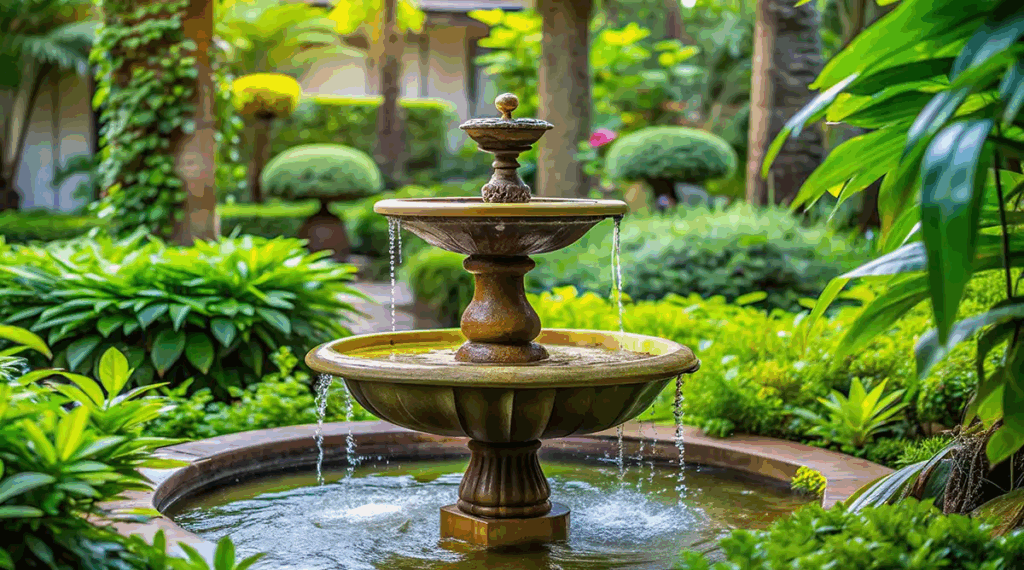
- Cast Stone: Mimics limestone or granite but resists cracking. Perfect for classic tiered fountains.
- Recycled Copper: Develops a verdigris patina over time; antimicrobial properties reduce algae.
- Basalt & Natural Rock: Volcanic rock (like Triple Hollowed-Out Basalt) offers organic textures and durability.
- Avoid: Non-UV-stabilized plastics—they fade and degrade quickly.
4. Planning Your Water Feature: 5 Pro Tips
- Sound Scaling: Match water noise to your space—a soft trickle (20 dB) for small gardens; robust cascades (50 dB) mask traffic in urban yards.
- Auto-Fill Systems: Essential in hot climates. Sensors prevent pump burnout by topping up water automatically.
- Placement Perfection:
- Position within 15 ft of seating areas for auditory impact.
- Avoid overhanging trees to reduce debris.
- South-facing solar panels maximize efficiency.
- Ecosystem Integration: Surround features with native, water-wise plants like sedge, lavender, or bee balm.
- Lighting Layers: Uplight fountain textures with warm LEDs. For ponds, use submerged lights to illuminate fish paths
5. Low-Effort Maintenance Hacks
- Algae Control: Use barley straw bundles or phosphate removers—avoid chemicals to protect wildlife.
- Seasonal Care: In freezing climates, drain and store pumps. Solar features like PowerBee Bowl withstand mild winters.
- Debris Management: Skim weekly; install mesh nets in fall. For ponds, add ramshorn snails to consume sludge.
6. The Eco-Impact: Water Features as Climate Allies
Modern designs actively combat environmental strain:
- Stormwater Management: Dry streams and swales redirect runoff, reducing erosion.
- Carbon Sequestration: When paired with native plants, water features support microorganisms that capture CO2.
- Heat Mitigation: Evaporative cooling counters urban “heat island” effects—a single fountain cools 100 sq ft
Conclusion: Crafting Your Liquid Legacy
Water features are no longer mere ornaments—they’re dynamic tools for ecological restoration and personal rejuvenation. By embracing 2025’s trends—solar intelligence, regenerative materials, and wildlife-friendly designs—you create a legacy of resilience. Start small: a self-contained fountain on a patio. Dream big: a custom oolite stone cascade. Whatever path you choose, let water weave its quiet magic into your garden’s story.
“A garden without water is like a symphony without silence—it lacks the space for reflection.” — Inspired by Cliché Mag 7
Ready to begin? Download our Water Feature Planning Checklist to map your project’s sunlight, sound, and sustainability goals!